Loading
Week 1: Welcome Page

Howdy!
My name is Matthew Morris-Cook, and I'm an Instructional Designer.
Dedicated Instructional Designer, project manager, and multimedia content creator with a proven record of aligning learning experiences with organizational goals to achieve target KPIs. Managed cross-functional projects and high-performing teams with the help of key stakeholders, leaders, and subject matter experts (SMEs) to achieve measurable results. Skilled in multimedia creation, including video, audio, animation, eLearning, games, graphic design, and editing.
Justification for CC License
I chose the CC BY-ND license because my website uses a WordPress theme that has restrictions on how I may use the content hosted on my website. I only have permission to adapt the theme for my own purposes, but others may not use or adapt my website without purchasing the theme themselves.
CC BY-ND

Week 2: Behaviorism
Overview
Behaviorism focuses exclusively on observable behavior guided by external stimuli and response with reinforcement serving as the primary means of driving learning outcomes. Pioneered in the early 20th Century, behaviorism had a huge impact on psychology, education, and learning theory. Critics argue that behaviorism “ignores internal cognitive processes, such as thoughts and feelings [and] reduces learning to the stimulus-response model” (Brau, Fox, and Robinson, 2022).
Major Figures
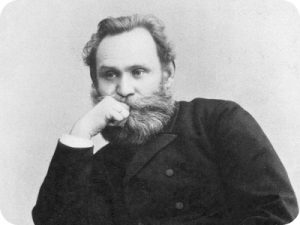

Ivan Pavlov
Pavlov’s famous experiments on salivating dogs produced his most important insight for classical conditioning. By playing a tone while feeding the dogs, the tone itself triggered the salivation response. His work established some key principles of behaviorism, such as the necessity of behaviors to be observable, follow a stimulus-response relationship, and be shaped by the environment.
B.F. Skinner
Skinner introduced the idea of radical behaviorism, asserting that “internal processes, such as thoughts and emotions, should be considered when analyzing behavior” (Brau, Fox, and Robinson, 2022, 3.1). He also defined operant conditioning, which suggests that rewards increase the likelihood of behaviors being repeated while punishments make behaviors less likely.
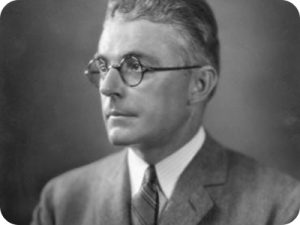
John B. Watson
Watson’s behaviorism argues that consciousness is not observable and should be ignored in experiments. His famous Little Albert experiment involved an infant and was later considered unethical, but his experiments applying classical conditioning highlighted the environmental influence on behavior.
Timeline
-
Pavlov's Dog Experiments
1890sIvan Pavlov
Pavlov's eponymous experiments on salivating dogs established the basics of classical conditioning by playing a tone when food was given, so closely associating the two stimuli that the dogs would salivate at the sound of tone alone. His research showed that behaviors could be learned through stimulus-response and formed the foundation for behaviorist principles in psychology.
-
Law of Effect Study
1905Edward Thorndike
Thorndike's study found that "the probability that a particular stimulus will repeatedly elicit a particular learned response depends on the perceived consequences of the response [and] new stimulus-response connections are strengthened only if the response is followed by behavioral responses that were most closely followed by a satisfying result" (Rafferty, 2023, para. 1)
-
Little Albert Experiment
1913John B. Watson and Rosalie Rayner
Watson and Rayner conducted an experiment on a 9-month-old child to attempt to induce a phobia. While the experiment demonstrated some elements of classical conditioning, it was criticized for being unethical.
-
The Behavior of Organisms Published
1938B.F. Skinner
Introduces the principles of operant conditioning and strongly argues for the relationship between rewards and punishments in the adoption or avoidance of behavior. He also expounded upon Thorndike's Law of Effect.
-
Nine Events of Instruction
1965Robert Gagné
Gagné first defined 8 types of learning conditions, based on stimulus-response, to develop his 9-step sequence of learning instruction.
Strengths and Weaknesses
Strengths
- Objective Outcomes: Behaviorism focuses only on observable outcomes, so results are more important than internal processes.
- Measurable Objectives: It’s easier to measure observable behaviors than thoughts and emotions.
- Structured Learning: Offers a systematic approach to learning with clear guidelines.
Weaknesses
- Ignores Internal Motivations: Focusing so much on observable behaviors ignores the internal worlds of learners.
- Limited Application: Not every learning objective can be linked to an observable behavior change.
- Lack of Motivation: Only focusing on external rewards and punishments may sabotage learners’ ability to establish long-term intrinsic motivations.
Applications to Learning Design
K-12
+
-
As online learning becomes more-and-more important in the post-COVID world, the need to leverage complex, multimedia content is more important. Behaviorism provides a means of providing concrete and immediate feedback and rewards and an objective means of testing and adapting content for more effective learning.
Higher Education
+
-
Self-paced learning courses, such as this course, rely on behaviorism to breakdown complex tasks into smaller, more manageable units, so that learners can track their own progress and participate in asynchronous online discussions and activities rooted in behaviorism.
Professional Context
+
-
As it is rooted in objective criteria, behaviorism offers a powerful tool to drive organizational change through interactive simulations, microlearning modules, and self-paced learning to help learners practice and reinforce critical behaviors.
Examples of Behaviorism in Learning Design
Pre-Course Quiz
Test learner knowledge before they begin a course, and then allow them to compare their results after the end of the course, so they can become aware of their progress and more cognizant of what they’ve learned, leading to positive reinforcement and retention.
Immediate Feedback
Rather than using only an end-of-course quiz, create frequent micro knowledge checks to drive positive reinforcement and increase engagement.
References
- Brau, Fox, and Robinson (2022). In R. Kimmons’ Education Research across Multiple Paradigms, 3.1.
- Rafferty, J. (2023, August 29). Thorndike’s law of effect. Encyclopedia Britannica. https://www.britannica.com/science/Thorndikes-law-of-effect
Week 3: Cognitivism
Overview
Cognitivism makes the internal cognitive processes of learners the central focus of research, such as how the brain stores and processes memory, how new knowledge is acquired, or how learners solve problems. In many ways, cognitivism is a rejection and alternative to behaviorism, which ignored the inner workings of the mind.
Key Researchers
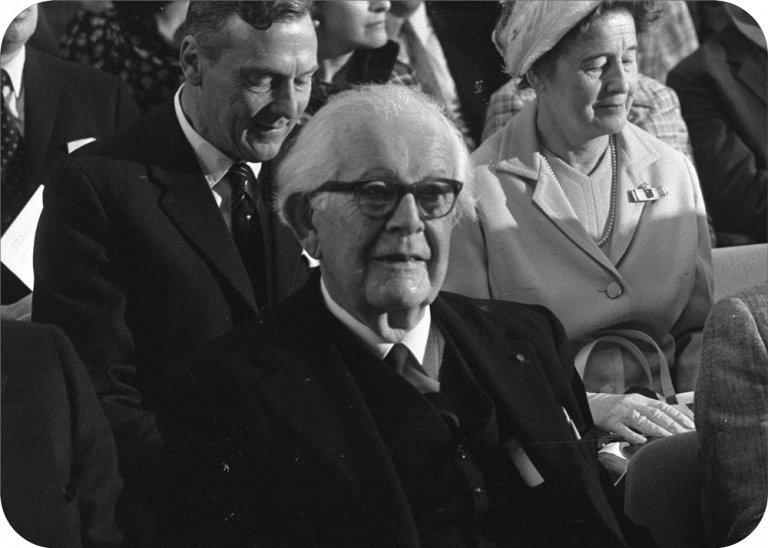

Jean Piaget
Piaget broke from behaviorism by focusing on the complexities of the human mind, emphasizing the importance of active learner engagement. Recognizing the cognitive differences between children and adults, Piaget proposed 4 stages of cognitive development: sensorimotor (0 to 2), preoperational (2 to 7), concrete operations (7 to 11), and formal operations (11+). One of his most important insights involves the ability to shift from concrete to abstract thought.
Lev Vygotsky
Vygotsky emphasized the importance of social interactions to learning. Unlike Piaget, Vygotsky proposed the Social Development Theory (SDT), which suggests that children co-create their learning experiences. One important element of SDT is the concept of the Zone of Proximal Development (ZPD), which attempts to bridge the gap between a learner’s present capacity to their learning potential, focusing on activities that are both challenging and attainable.


Jerome Bruner
Bruner proposed that children are active problem solvers, capable of exploring challenging subjects beyond rote learning to predict, create, and invent new ideas. His early studies uncovered how past experiences shape cognition, including the key insight that cognition can adapt when information is presented in different ways and contexts. He strongly advocated for active engagement where learners construct rather than merely assimilate meaning.
Albert Bandura
Bandura integrated cognition and interpersonal learning into his Social Cognitive Theory (SCT), asserting that observation, imitation, and social experiences are critical to learning. He proposed that learners seek a sense of mastery over their learning by continually monitoring and adjusting their behaviors, based on outcomes. Bandura championed self-efficacy in learning, which catalyzes the motivation, effort, and persistence needed to master challenging tasks.
Timeline
-
Piaget's Developmental Stage Theory
1936Jean Piaget
Piaget formalized his Developmental Stage Theory (DST) of learning in 1936 with Origins of Intelligence in the Child, building on his earlier research related to childhood cognition and problem solving.
-
Zone of Proximal Development
1920s to 1934Lev Vygotsky
Vygotsky developed "the concept of [the] zone of proximal development (ZPD) [ ... ] during the late 1920s and elaborated progressively until his death in 1934" (Shabani, Khatib, and Ebadi, 2010, p. 238). ZPD represents the "sweet spot" between a learner's present abilities and their learning potential.
-
On the Perception of Incongruity: A Paradigm
1949Jerome Bruner and Leo Postman
Published in 1949 in the Journal of Personality, this pioneering study examined how social environments affect perceptions and cognitive functions, showing how cognition changes and adapts to different perceptual triggers in the environment.
-
Bobo Doll Experiment
1961Albert Bandura
Bandura's controversial experiment, known as the "Bobo Doll Experiment," involved studying the response of children to adults acting aggressively toward a doll. The results suggested that children exposed to aggression were more likely to become aggressive themselves, particularly boys.
-
Social Learning Theory Published
1977Albert Bandura
Bandura consolidated his research and theory into his book, Social Learning Theory.
Implications of Cognitivism to Learning Design



Learner Autonomy
Learners are more than merely “black boxes” of stimulus-and-response, as suggested by behaviorism. With cognitivism, learners have a means to “guide their own learning using mental strategies” (Michela, 2022, para. 1). Instructional designers can take advantage of this insight to encourage learners to empower themselves and develop self-efficacy.
Memory
Cognitivism uncovered important insights into how the human brain processes, stores, and recalls memory, including the differences between short- and long-term memory. According to Michela (2022), these insights suggest that information should be presented to learners in “chunks” and via the four sensory elements of working memory to help learners acquire and retain new information (para. 7).
Cognitive Load
One key insight of cognitivism is cognitive load theory (CLT), which posits that there is “a finite amount of information [that] can be processed in the mind at one time, based on the limits of perception, attention, and working memory” (Michela, 2022, para. 19). By accounting for intrinsic (complexity) and extrinsic (presentational) cognitive loads, instructional designers can provide “scaffolding” to learners to optimize the learning experience.
Strengths and Weaknesses of Cognitivism in Corporate Contexts
Strengths
- Self-Efficacy in Learning: Empowers learners to take the lead in their own learning journey by helping them become aware of their own internal processes and providing the means to change, adapt, and learn autonomously. For example, an initial in-person software training may allow learners to engage with self-paced or just-in-time learning materials to expand on their basic skills.
- Structured Learning: Aligning learning to the way learners process and store information increases the likelihood of retention. For example, safety training in a factory may review key components of the assembly-line process in discrete “chunks” to make a complex, possibly dangerous process safer and more manageable.
- Avoids Cognitive Overload: Cognitivism helped define the limits of how much and what type of information learners can process at one time. For example, a virtual training session could focus on one form of stimulus at a time by shutting cameras off during self-reflection activities.
Weaknesses
- Lack of Objectivity: Research on internal mental processes rely on subjective experience, which may not be accurately relayed to researchers. For example, workers may provide responses to surveys they believe their managers want to hear, rather than their actual subjective experience.
- Fuzzy Measurements: Subjective experience cannot be quantified in the same way as objective behaviors. For example, many corporations rely on Key Performance Indicators (KPIs) to make decisions, which may not be possible without objective standards.
- Cultural Factors: Internal processes are affected by cultural and societal factors, which may not be accounted for in theory and research. For example, a multinational company may not be able to use the same training for workers in unique cultural and social contexts.
Sample Instructional Material: Kurzgesagt
The video animation company, Kurzgesagt, provides straightforward instructions on how to build a seemingly impossible, space-age project: a Dyson Sphere. The video effectively utilizes “scaffolding” and “cognitive load” by slowly building manageable concepts and providing adequate time for viewers to process graphics, diagrams, and animations, averaging 15 to 30 seconds per transition.
Week 4: Constructivism
Overview
Constructivism emphasizes the importance of the learning environment and uses an individual’s own unique learning perspective to help them construct knowledge. The theory attempts to introduce new knowledge by resolving conflicts between the learner’s internal schema and the external world. Constructivism focuses on updating existing schemas with new knowledge through accommodation techniques, such as change, modification, or replacement.
Key Researchers
Jean Piaget
Piaget broke from behaviorism by focusing on the complexities of the human mind, emphasizing the importance of active learner engagement. Recognizing the cognitive differences between children and adults, Piaget proposed 4 stages of cognitive development: sensorimotor (0 to 2), preoperational (2 to 7), concrete operations (7 to 11), and formal operations (11+). One of his most important insights involves the ability to shift from concrete to abstract thought.
Lev Vygotsky
Vygotsky emphasized the importance of social interactions to learning. Unlike Piaget, Vygotsky proposed the Social Development Theory (SDT), which suggests that children co-create their learning experiences. One important element of SDT is the concept of the Zone of Proximal Development (ZPD), which attempts to bridge the gap between a learner’s present capacity to their learning potential, focusing on activities that are both challenging and attainable.
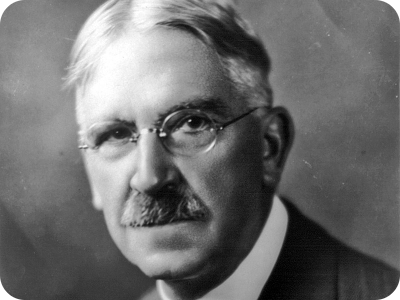
John Dewey
Dewey’s contribution to Constructivism was to meld Piaget’s cognitive focus with the social learning concepts pioneered by Vygotsky. Dewey emphasized hands-on learning and independent thinking as keys to a learner’s development and as pillars of modern democracies. As such, Dewey did not believe in keeping the school environment separate and distinct spaces for learning.
Timeline
-
Zone of Proximal Development
1920s to 1934Lev Vygotsky
Vygotsky developed "the concept of [the] zone of proximal development (ZPD) [ ... ] during the late 1920s and elaborated progressively until his death in 1934" (Shabani, Khatib, and Ebadi, 2010, p. 238). ZPD represents the "sweet spot" between a learner's present abilities and their learning potential.
-
Piaget Publishes The Construction of Reality in the Child
1956Jean Piaget
Argues that children actively construct their experiences through their sensory experiences and interactions with the environment.
-
Bruner Publishes The Process of Education
1960Jerome Bruner
Bruner expanded on constructivist ideas by proposing a spiral curriculum where topics are revisited at increasing levels of complexity. He advocated for active learning and discovery, suggesting that learners construct new ideas based on prior knowledge.
-
Papert's Publishes Mindstorms: Children, Computers, and Powerful Ideas
1980Seymour Papert
Papert, a student of Piaget, explored how computers can be used as tools to facilitate learning and construction of knowledge. His work with the Logo programming language exemplified constructivist principles by allowing children to engage in meaningful learning experiences through hands-on programming.
Implications of Constructivism to Learning Design
Nature of Learner
Learners are put front-and-center of the learning process and are responsible for the active creation and construction of their learning. Learners need to connect prior knowledge and experiences to new systems of knowledge, following the scaffolding guidelines outlined in the Zone of Proximal Learning (ZPL) model.
Role of Instructor
Instructors should favor a hands-on approach over the lecture model. They should think of themselves as “facilitators” and not “teachers.” Instructors should turn students away from themselves.
Strengths and Weaknesses of Constructivism in Corporate Contexts
Strengths
- Manageable Steps: Providing appropriate scaffolding to encourage workers to keep making meaningful, but challenging, yet achievable progress will help them continuously develop new skills.
- Structured Learning: Aligning learning to the way learners process and store information increases the likelihood of retention. For example, safety training in a factory may review key components of the assembly-line process in discrete “chunks” to make a complex, possibly dangerous process safer and more manageable.
- Avoids Cognitive Overload: Cognitivism helped define the limits of how much and what type of information learners can process at one time. For example, a virtual training session could focus on one form of stimulus at a time by shutting cameras off during self-reflection activities.
Weaknesses
- New Learners: Those at the foundational stages of Bloom’s Taxonomy need more structure than other stages and can’t rely on prior experiences.
- Groupthink: Workers may default to the lowest common denominator when working in groups as the theory is more apt for individual vs. group learning contexts.
- Fuzzy Measurables: Since a hands-on approach is preferred, it may be difficult to assess employees based on rote tests, which don’t accurately reflect the hands-on learning.
Sample Scenario
Scenario: High school students learning about the dangers of global warming and environmental sustainability. Students play a cooperative game similar to <i>Pandemic</i> where they must play the role of city manager’s to reduce carbon footprint.
Students begin by exploring interactive eLearning modules that educate them on the dynamics of the game, such as pollution, energy consumption, waste, etc. They are then taken through several gameplay scenarios to see possible outcomes.
IZPD Skills
Data Analysis and Interpretation: Students play the game over the course of the semester, and every time they fail a challenge or lose the game, they must study the data their efforts generated and rethink new solutions.
Systems Thinking: Students will develop a holistic understanding of how different aspects of city planning affect the outcomes of the game, and they slowly learn to appreciate the delicate balances needed for decision making.
Problem-Solving and Decision Making: Students will engage in critical thinking to propose and evaluate sustainable solutions. They will make informed decisions based on their analysis and understanding of environmental principles.
Scaffolding Strategy
Iterative Gameplay: Students encouraged to play the game independently, then work with the instructor and other students to discuss strategies for future success.
Differentiation Based on Learner Needs:
Differentiated Content: Provide optional readings, videos, and resources at varying levels of complexity to accommodate different learning styles and readiness levels.
Varied Assessment Formats: Offer multiple assessment options such as written reports, multimedia presentations, and online discussions. This allows students to demonstrate their understanding in ways that align with their strengths and preferences.
Personalized Feedback: Use formative assessment strategies to provide timely and specific feedback tailored to individual student progress. Encourage peer feedback to promote collaborative learning and reflection.
Week 5: Connectivism
Overview
Connectivism emphasizes the role of technology and networks for learning, particularly in regard to how learners build and share knowledge over networks, such as Internet forums and social media. As an outgrowth of cognitivism and constructivism, this theory views educators as facilitators and places learners at the center of knowledge acquisition. Connectivism embraces the fast-paced changes in technology and encourages learners to develop digital literacy, critical thinking, and self-directed learning.
Key Researchers

George Siemens
George Siemens helped found the theory of connectivism with the help of Stephen Downes, who partnered with him to create one of the first massive open online course (MOOC) in 2008. Siemens holds a PhD in Psychology from the University of Aberdeen. In 2017, he became the Director of the Centre for Change and Complexity in Learning at the University of South Australia.

Stephen Downes
Stephen Downes is one of the founders of connectivism as a learning theory. Downes is a Canadian-born philosopher and educational theorist focused on digital learning and online technologies. Downes and George Siemens launched one of the first massive open online course (MOOC) in 2008. Downes holds degrees in Philosophy from the University of Calgary.
Timeline
-
Concept of Connectivism Published as a Blog Post
2004George Siemens
Siemens introduces the concept of Connectivism to the world as a blog post, later published as "Connectivism: A Learning Theory for the Digital Age" in the International Journal of Instructional Technology and Distance Learning.
-
Downes Publishes An Introduction to Connective Knowledge
2005Stephen Downes
Describes how knowledge is distributed across network connections that covers three key domains: knowledge, learning, and community.
-
Siemens and Downes Create First MOOC
2008George Siemens and Stephen Downes
Siemens and Downes deliver an online course, "Connectivism and Connective Knowledge," which is the first test case of a massive open online course (MOOC), serving over 2000 participants in the first iteration.
-
Connectivism Adopted in Higher Education
2014University of Edinburgh
One of the first major universities to formally integrate the concepts and principles of Connectivism into their curricula as part of their Master's program in Digital Education.
Implications of Connectivism to Learning Design

Know-Where
In contrast to other learning theories, Connectivism asserts that knowing how to find, retrieve, and assess knowledge (know-where) is more important than internalized learning (know-how or know-what). Facilitators must create a productive learning environment and teach learners how to find, create, and evaluate knowledge and cultivate productive network connections.
Networked Learning
Learning emerges out of the ability for learners to tap into information flows, connect and create learning nodes, and find connections across disciplines and sources. Cultivating productive networks of learners, knowledge sources, and collaboration serve as the highest form of learning in the Internet age.
Personal Learning Networks (PLNs)
Learners are encouraged to cultivate their own Personal Learning Networks (PLNs), which are networks of individuals and information sources that provide a means of growing, curating, and co-creating knowledge in a certain field of study. PLNs allow learners to take control and augment their learning development.
Strengths and Weaknesses of Connectivism in Corporate Contexts
Strengths
- Iterative Knowledge Building: Learners may take an active role in building internal learning systems and co-develop training, for example through the development of internal Wikis.
- Collaboration: Learners from cross-functional teams can collaborate and share knowledge, allowing for new ideas and solutions to develop, rather than being relegated to knowledge silos.
- Personal Development: Learners can continue to develop their knowledge and cultivate new skills by engaging with professional networks and engaging with new kinds of learning outside of their field.
Weaknesses
- Proprietary Information: Private companies may have strict rules on sharing information outside of the company, making it difficult to collaborate fully with networks outside of the company.
- Bad Information: It is becoming increasingly difficult to identify and assess poor information sources as traditional arbiters of truth and gatekeepers lose ground to information information networks or bad actors.
- Excuse to Defund: Companies may rely too heavily on self-education in an effort to save money on formal training or professional education.
Professional Learning Network
Association for Talent Development (ATD)
Overview
ATD is a professional organization for instructional designers, trainers, and learning managers who develop content for workplace environments. They publish books, host conferences, and offer certified training programs for all learning modalities.
Benefits
I have taken several certification courses through ATD and have attended several conferences, which allowed me to extend my professional network and find connections which eventually led to employment opportunities.
Portland Design Thinkers (PDT)
Overview
PDT is a local professional organization focused on creating a productive community for designers of all kinds, providing training and education, and encouraging professional growth.
Benefits
As a local organization, PDT offers a place to network and develop in-person connections with with other instructional designers, expand my network, and find new opportunities for employment.
Week 6: Andragogy
Overview
Pioneered by Malcolm Knowles in the early 1980s, Andragogy focuses on the unique needs of adult learners, who tend to prefer self-directed learning and real-life scenarios. According to Knowles, adults tend to draw on life experience, learn through practical examples, require knowledge that is immediately useful, are internally motivated, and need to understand why the learning is relevant to them.
Key Researchers

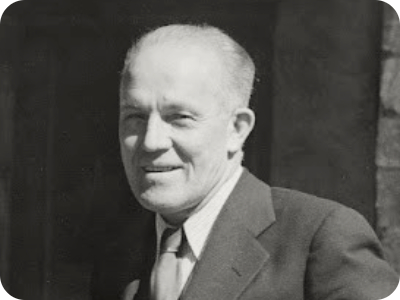

Malcolm Knowles
Knowles is considered one of the preeminent thinkers of Andragogy and is responsible for its development in the early 1980s. Knowles posited six assumptions for adult learners, such as learners being self-directed, prefer learning that is self-directed and tied to practical experience, problem solving, are internally motivated, and need to understand the “why” of what they’re learning.
Eduard C. Lindeman
Lindeman is considered one of the founders of adult education. His book, The Meaning of Adult Education, was one of the first efforts to identify the primary features of adult education. Before his retirement in 1950, Lindeman published over 200 articles and 5 books. His key insights into adult education were that adults learn by experience, are life-centric, and self-directed.
Jack Mezirow
Mezirow developed a theory called “perspective transformation” that proposed that adults have a unique way of acquiring new perspectives to understand changing events. He is considered one of the founders of transformative learning, which identifies 10 stages of adult learning related to perspective transformations.
Timeline
-
Lindeman Publishes The Meaning of Adult Education
1926Eduard C. Lindeman
Lindeman's book provided one of the first systematic accounts of adult education, helping to identify some key characteristics of adult education, such as adult learners' need for life-relevant knowledge and intrinsic motivation.
-
Knowles Coins the Term Andragogy
1968Malcolm Knowles
Knowles publishes a research article, "Andragogy, Not Pedagogy," in Adult Leadership, where he first coins the term, 'andragogy.'
-
Knowles Publishes Adult and Continuing Education: Theory and Practice
1970Malcolm Knowles
One of the first textbooks to introduce adult education to a mainstream audience. Widely seen as the most important introductory texts in the field for many decades.
-
Mezirow Publishes Transformative Dimensions of Adult Learning
1991Jack Mezirow
In this book, Mezirow presents his theory of transformative learning, which focuses on how adults change their perspectives through critical reflection.
Implications of Andragogy to Learning Design

Internal Motivation
Since adult learners are internally motivated, facilitators that can communicate the importance and real-world significance of their lessons will find more receptive learners eager to engage with content.
Life Experience
Adult learners can draw upon a rich reserve of life experience when learning new material. This attribute enhances their ability to discuss the practical implications of the content they engage with and contribute real-world examples to class discussions.
Problem Focused
Adult learners respond positively to problem-focused learning, allowing facilitators to add real-world examples to their learning content and design content that more closely resembles the learning environment where that content is most applicable.
Strengths and Weaknesses of Andragogy in Corporate Contexts
Strengths
- Problem-Centered Learning: Since adults are problem-centric learners, facilitators can move beyond theory in instruction and design learning content that is directly applicable to their jobs and lives.
- Internal Motivation: Adult learners are internally motivated, so if they see the relevance of learning to their jobs or personal lives, they will be more receptive, active, and motivated learners.
- Life Experience: Adult learners can draw on a wealth of life experiences, which can help them more quickly adapt and internalize learning because they may have encountered similar problems in the past.
Weaknesses
- Adults Learning is Not Unique: Some scholars in the field have suggested that the characteristics attributed to adult learners can be found in other learners as well, and are not specifically relegated to adults.
- Resistance to Learning: It may not be possible to persuade some adult learners that a new skill or theory is applicable to them, but not all kinds of learning have a 1-to-1 connection to practical skills.
- Lack of Theory: Since adult learners don’t respond as well to “theoretically” learning, they may have more difficulty perceiving the “big picture” of more abstract ideas and concepts.
Past Learning Experience
Informal Adult Learning Experience
When I worked as a Technical Writer, a mechanical engineer showed me some renderings of products they had made and were intending to use for marketing. I offered to create improved renderings, and my supervisors gave me the go-ahead; however, I had never made 3D renderings before, so I had to dive in an learn an entirely new 3D system, which was very complex in a short period of time in order to create product renderings for the company. I was successful, and the renderings are still found on the company website today.
Formal Adult Learning Experience
While onboarding for a new job at a Big Tech company, I was given over 100 eLearning modules to complete in a few weeks. Unfortunately, the modules were not helpful, some of them were repeated content, and I had to proactively find out some information on my own. In this case, the lack of organization made the formal learning less successful than my individual efforts to seek out and learn new information about the company.
Week 7: Assessment and Learning Models
Learning Scenario
Context
Advanced Placement (AP) American History class in a high school. The focus for this portion of the course is political rhetoric in American presidential debates. Students study six of the most famous and influential speeches and twelve most influential political figures. Students have reviewed selected transcripts of the speeches and audio and video recordings, when available.
Audience
- AP American history students
- High school seniors
- Aged 17 to 18
- 24 total students
- Completed American History 101, 102, and 103
Project Description
For this experiential assignment, students form groups of 4, tasked with creating and submitting three short presentations and one capstone project, where they recreate the last presidential debate, using the rhetorical style of one of the six famous debaters, such as Lincoln and Douglas or Kennedy and Nixon.
Project Elements
- 10-page essay analysis on rhetorical styles of one of the six presidential debates
- 10-minute class presentation to educate other students on the findings of their essay
- Facilitated class discussion on differences in rhetorical styles between historical debates and the latest presidential debate
- 15-minute reenactment of latest presidential debate in the rhetorical styles of previous debaters
Formative and Summative Assessments
Formative
At each stage of the project development, students will receive timely feedback and analysis of their work, both from the facilitator and through peer review and class discussion. Over the course of four weeks, students will complete short, in-class quizzes. In addition, the facilitator will create short lectures to fill the gaps in students learning as the project develops.
Summative
Students and facilitator score debate performances using a formal rubric, which evaluates their understanding of the following:
- Understanding of rhetorical style
- Demonstration of mastery of debate structure
- Knowledge of candidate’s viewpoints and talking points
Authentic Assessment
Once the team projects are completed, the class will work collectively on a post-project portfolio where they create a website that hosts the historical documents, primary sources, analysis of the rhetorical developments of presidential debates, and multimedia activities that explain and juxtapose the changes and developments of American political rhetoric over time.
Connections to Learning Theory
Connectivism
Constructivism
Andragogy
For the final authentic assessment, students work to build a website that serves as a kind of Personal Learning Network (PLN) where they work to co-create and share their knowledge to other knowledge nodes.
The sequential nature of the project slowly builds students’ knowledge and utilizes the principles of the Zone of Proximal Development (ZPD) to continually bridge the gap between students current capacities and experiences and more advanced concepts.
Although these high school students are not traditional “adult learners,” they have adequate experience from former high school courses that allows them to complete problem-based activities which ask them to demonstrate real-world knowledge of the key concepts of political rhetoric.
Week 8: Signature Assignment
Minicourse Idea and Learning Theory Connection
Overview
A few months ago, an unexpected layoff put my career as an Instructional Designer (ID) on hold. Given the recent layoffs in the tech industry, I’ve faced fierce competition for available jobs. Although I can articulate my design philosophy in interviews, NDAs prevent me from sharing my previous work, creating a gap between my approach and capabilities in learning design and how potential employers see those skills. To bridge this gap, I plan to create a minicourse that highlights my experience and demonstrates my technical skills in interactive, media-rich learning design. Since my audience will be other IDs and Learning Design Managers, this minicourse will reflect their sensibilities and prioritize those elements of learning design they value most. To this end, this minicourse will mimic the “Core Values” framework often found on company websites, focusing on concepts critical to Constructivism and Andragogy.
Course Design Outline
Problem Statement
Potential employers have difficulty understanding an ID’s design philosophy and technical acumen without practical work samples, which NDAs often preclude.
Target Audience
- Instructional Designers
- Learning Design Managers
- Sales Enablement Managers
- Product Managers
Learning Objectives
- Understand the roles and experience of ID candidates
- Appraise technical and design capabilities of ID candidates
- Compare-and-contrast sample work of ID candidate with other candidates
- Evaluate candidate fitness for open ID roles
Instructional Strategies
Constructivism
- Zone of Proximal Development
- Structured learning
- Cognitive load
Andragogy
- Problem-centered learning
- Internal motivation
- Self-directed learning
Deployment Plan
- Minicourse hosted on SCORM Cloud
- Course sections linked to personal portfolio page
- Clips and screenshots of minicourse shared during interviews
Evaluation Plan
- Post-interview survey
- Advancement in interview process vs. pre-minicourse
Connection to Learning Theories
Constructivism
Learning strategies borrowed from Constructivism will provide scaffolding for potential employers to understand, absorb, and evaluate the skills of ID prospects.
Strengths
Zone of Proximal Learning (ZPL)
Minicourse will allow potential employers to engage with increasingly sophistical learning designs tied to clear learning design principles
Scaffolding
Potential employers can move through content in sequence of resume and observe sample work in context.
Weaknesses
As busy professionals, IDs and Learning Design Managers may not have the time or inclination to complete even a short minicourse in full.
Andragogy
Since the target audience will be established IDs and Learning Design Managers, Andragogy provides an important key to connecting with adult learners.
Strengths
Internal Motivation
Potential employers can access sample work as needed and can refer back to work while conducting interviews.
Problem Focused
Potential employers can easily connect sample work with specific problems relevant to their business or job focus.
Weaknesses
The audience for this minicourse is not accustomed to being in the position of the learner vs. facilitator, and may resent or resist attempts to place them in this vantage point.